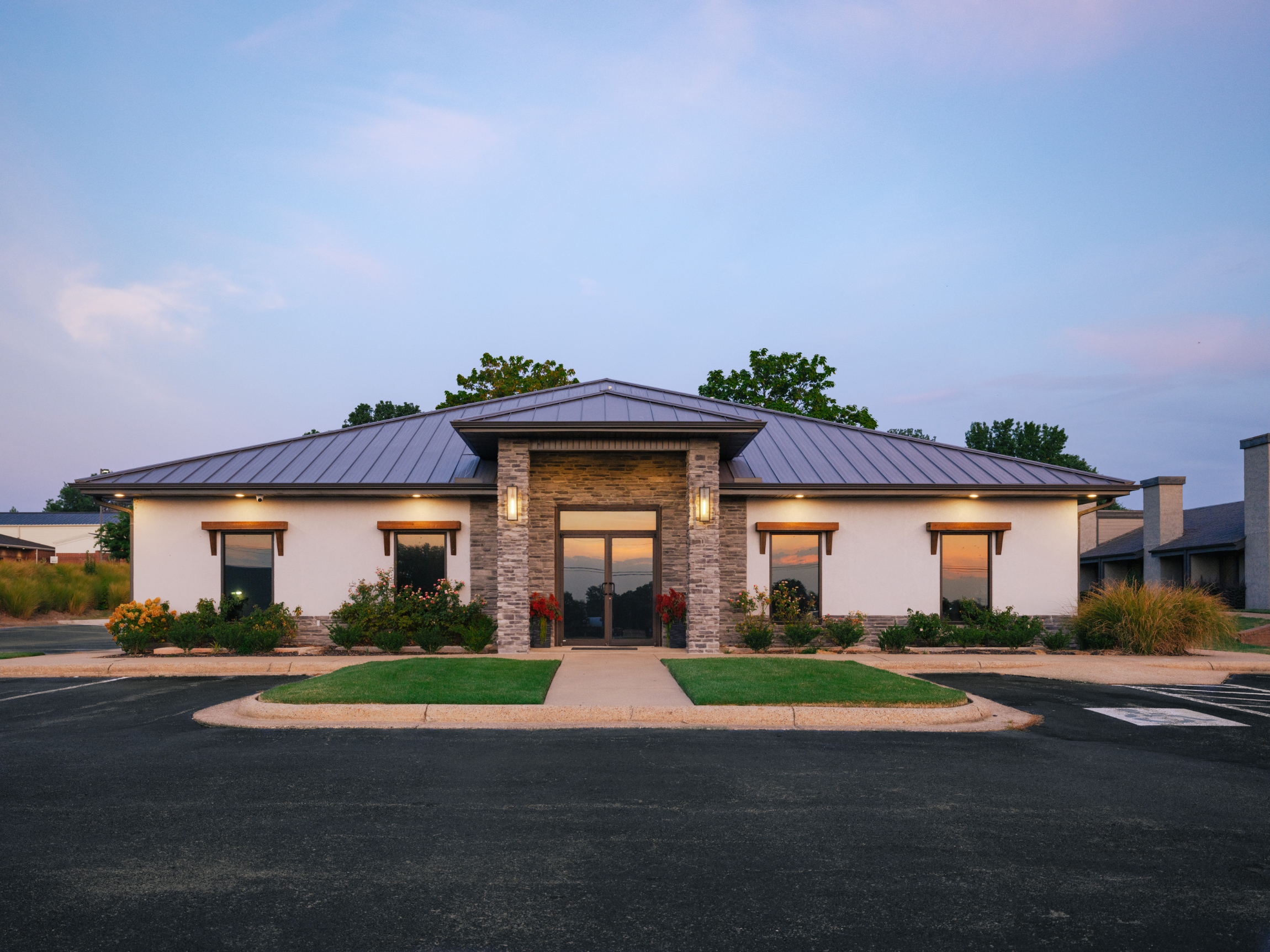
Oral and maxillofacial surgery is a dental specialty focused on treating conditions of the jaw, face, and mouth that require surgical expertise. For patients exploring Northeast Arkansas dentistry options, these procedures range from impacted wisdom teeth removal and dental implant placement to corrective jaw surgery and facial trauma repair. Oral and maxillofacial surgeons complete years of hospital-based residency training beyond dental school to perform these treatments safely. At Northeast Arkansas Center for Oral and Maxillofacial Surgery, located at 2609 Browns Ln. in Jonesboro, AR, Dr. McDonough and Dr. Phillips bring 40+ years of combined surgical experience to every case.
What Is Oral and Maxillofacial Surgery?
Oral and maxillofacial surgery is a dental specialty that treats diseases, injuries, and defects of the jaw, face, and mouth through surgical intervention. Surgeons in this field handle everything from impacted wisdom teeth to complex dental implant placement and corrective jaw procedures. It’s a distinct discipline, and the training reflects that. For patients searching for Northeast Arkansas dentistry specialists, understanding this field helps you make a better decision about your care.
Unlike general dentistry, oral and maxillofacial surgery requires years of additional education beyond dental school. Oral surgeons complete hospital-based residency programs, typically four to six years, where they train alongside medical residents in anesthesiology, internal medicine, and general surgery. The depth of preparation allows them to handle the most challenging dental and facial conditions safely. At Northeast Arkansas Center for Oral and Maxillofacial Surgery in Jonesboro, AR, Dr. McDonough and Dr. Phillips completed this rigorous training path before bringing their expertise to the region.
Common procedures performed by oral surgeons include:
- Wisdom teeth removal (especially impacted teeth)
- Dental implant placement and bone grafting
- Corrective jaw surgery for misalignment
- Treatment of facial trauma and injuries
- Management of oral pathology and cysts
From Consultation to Recovery: How Oral and Maxillofacial Surgery Treatment Works
Getting oral and maxillofacial surgery doesn’t have to feel overwhelming. The process is straightforward from first visit through recovery.
Your Initial Consultation
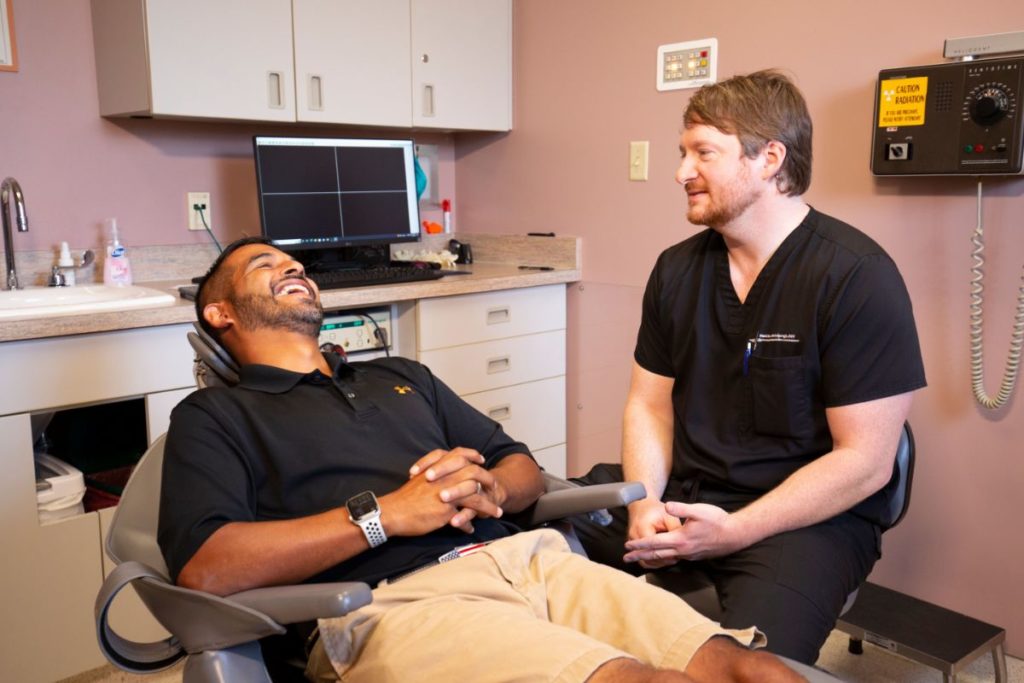
Treatment begins with a consultation. A referral from a general dentist is one option, but many patients schedule directly with an oral surgery practice. During this visit, the surgeon listens to your concerns and reviews your dental history. You’re there to ask questions and get answers, not sit through a lecture.
The Examination Process
Next comes a thorough exam, typically including modern imaging like CBCT scans or panoramic X-rays. These detailed images reveal the position of teeth, bone density, nerve locations, and other structures that affect treatment planning.
How Is Your Treatment Plan Developed?
Based on exam results, the surgeon develops a treatment plan designed for your specific needs. Sedation options come up during this phase. Many patients choose IV sedation for a calm, anxiety-free experience, while others prefer local anesthesia for simpler procedures.
Procedure Day
On surgery day, the team makes sure you’re comfortable before anything begins. IV sedation allows you to relax completely while remaining safe under careful monitoring. Most oral and maxillofacial surgery procedures wrap up in a single visit.
Recovery and Follow-Up
After the procedure, you’ll receive detailed instructions for at-home care. Post-operative follow-up appointments give the surgeon a chance to monitor healing and address any questions. Recovery times vary by procedure, but most patients are surprised by how manageable the recovery period actually is.
Why Choose a Specialized Oral Surgeon at Northeast Arkansas Center for Oral and Maxillofacial Surgery?
Selecting an oral surgeon for your procedure offers distinct advantages over other treatment options. Here’s why specialized care matters for patients throughout Northeast Arkansas, Southern Missouri, and Western Tennessee.
The Value of Surgical Training
Oral and maxillofacial surgeons complete four to six additional years of residency training after dental school. This hospital-based education covers complex surgical techniques, anesthesia administration, and management of medical emergencies. The quality of care patients receive reflects that preparation directly.
IV Sedation Changes the Experience
IV sedation can transform the whole surgical visit. Patients feel calm and relaxed during the procedure, with little to no memory of the treatment afterward. For anyone with dental anxiety or those facing longer procedures, this option makes a real difference.
Better Outcomes Through Focused Expertise
Specialized training translates to better results. Oral surgeons handle complex dental implant placements, bone grafting procedures, and corrective jaw surgeries routinely. Their focused expertise helps reduce the risk of complications, and daily repetition means they can anticipate challenges that a generalist might not encounter often.
Personalized Care Built Around You
When the surgical team understands your concerns, your medical history, and your goals, the entire experience feels different. The team at Northeast Arkansas Center for Oral and Maxillofacial Surgery in Jonesboro, AR builds every treatment plan around the individual patient. You can feel confident that your smile is in good hands.
General Dentist vs. Oral Surgeon: What’s the Difference?
Many patients wonder when they need an oral surgeon versus their regular dentist. Both play important roles in oral health, but they serve different purposes, and knowing the distinction helps you make better decisions about your care. If you are weighing this specifically for tooth replacement, our guide on choosing between an oral surgeon and a general dentist goes deeper.
| Aspect | General Dentist | Oral Surgeon |
|---|---|---|
| Training | Dental school (4 years) | Dental school + 4-6 year surgical residency |
| Common Procedures | Cleanings, fillings, crowns, root canals | Wisdom teeth removal, implants, jaw surgery, bone grafts |
| Anesthesia | Local anesthesia, nitrous oxide | IV sedation, general anesthesia, local |
| Setting | Dental office | Surgical suite (often accredited) |
| Typical Cases | Routine dental care | Complex surgical cases |
When Do You Need a General Dentist?
A general dentist handles preventive care and routine treatments. Regular cleanings, cavity fillings, crowns, and basic tooth removal fall within their scope. They’re the first line of defense for maintaining oral health, and for most people, they’re the provider you see most often.
When Do You Need an Oral Surgeon?
Certain situations call for specialized surgical expertise:
- Impacted wisdom teeth that haven’t fully erupted
- Dental implant placement requiring bone grafting
- Jaw misalignment affecting bite or breathing
- Facial trauma from accidents or injuries
- Removal of cysts or tumors in the jaw
Many general dentists refer complex cases to oral and maxillofacial surgery specialists. This collaborative approach ensures the right level of care for each specific condition. If a dentist recommends seeing an oral surgeon, it’s because they want the best possible outcome for the patient. Specialty-trained oral surgeons handle these complex referrals in surgical settings accredited by the Accreditation Association for Ambulatory Health Care, with the training and equipment to manage even the most difficult cases. Northeast Arkansas Center for Oral and Maxillofacial Surgery is the only nationally accredited maxillofacial surgery clinic in Northeast Arkansas, Southern Missouri and Western Tennessee, which speaks to the standard of care patients can expect.
Who Is a Good Candidate for Oral and Maxillofacial Surgery?
You may be a candidate for oral and maxillofacial surgery if you have impacted wisdom teeth, missing teeth, jaw misalignment, TMJ disorders, facial trauma, or need pre-prosthetic preparation. Here are the most common situations:
- Wisdom Teeth Issues: Impacted, partially erupted, or troublesome wisdom teeth often require surgical removal. The best window for wisdom teeth removal is typically during the late teens to early twenties.
- Missing Teeth: Dental implants offer a permanent solution. They look, feel, and function like natural teeth and help preserve jawbone density over time.
- Jaw Misalignment: Significant bite issues or jaw asymmetry may require corrective surgery to improve both function and appearance.
- TMJ Disorders: Cases that don’t respond to conservative treatment, such as splints or physical therapy, may benefit from surgical intervention.
- Facial Trauma: Injuries to the face, jaw, or teeth often require an oral surgeon’s expertise for proper repair. Speed matters in these cases.
- Pre-Prosthetic Surgery: Some patients need bone grafting or ridge modification before receiving dentures, creating a stable foundation for the prosthetic.
Confirming Your Candidacy
A consultation with an oral surgeon determines whether a specific procedure is the right fit. Imaging and examination reveal the details of the condition, and the surgeon explains all available options. No two cases are identical, which is why this step matters.
Frequently Asked Questions About Oral & Maxillofacial Surgery
Do I need a referral to see an oral surgeon?
No referral is required. While many patients receive referrals from their general dentist, you can also contact a practice directly to schedule a consultation. At Northeast Arkansas Center for Oral and Maxillofacial Surgery, both referred and self-scheduled patients are welcome. You can reach the Jonesboro office to set up your first visit at any time.
How long is recovery after wisdom teeth removal?
Most patients return to normal activities within three to five days after wisdom teeth removal. Initial swelling and discomfort typically peak around day two or three, then gradually improve. Following post-operative instructions carefully helps ensure a smooth recovery.
Is IV sedation safe for dental procedures?
Yes, IV sedation is considered very safe when administered by trained oral and maxillofacial surgeons. These surgeons receive extensive anesthesia training during their residency, often logging thousands of hours of anesthesia cases. Throughout the procedure, the team monitors vital signs continuously to maintain safety.
What is the difference between a dental implant and a bridge?
A dental implant replaces the tooth root with a titanium post that fuses to the jawbone, and a crown attaches to this post to create a standalone replacement tooth. A bridge, by contrast, relies on adjacent teeth for support. Implants preserve bone density and don’t require altering healthy neighboring teeth, making them the preferred option for many patients. If you’re exploring Northeast Arkansas dentistry options for tooth replacement, a consultation can help determine which approach fits your situation.
How do I know if I need oral surgery or just a general dentist?
A general dentist can often determine when oral and maxillofacial surgery is necessary. Signs that point toward an oral surgeon include impacted wisdom teeth, the need for dental implants, jaw discomfort that doesn’t resolve with conservative treatment, or facial injuries. When in doubt, a consultation with an oral surgeon provides clarity about the best treatment path. The team in Jonesboro is happy to evaluate your situation and recommend next steps, whether that means scheduling a procedure or referring you back to your general dentist.
If you’re exploring treatment options for a dental or facial condition that may require surgery, talking with a specialty-trained oral surgeon is a good place to start. At Northeast Arkansas Center for Oral and Maxillofacial Surgery in Jonesboro, AR, Dr. McDonough and Dr. Phillips have provided oral surgical and dental implant care for 40+ years. A consultation can help you understand exactly what treatment would look like for your specific situation. Trust your smile to the experts.