
Implant-Retained Overdentures
If you’re missing all of your upper or lower teeth, an implant-retained overdenture can give you a secure, comfortable smile again. A few dental implants placed in your jawbone act as anchors, and your denture snaps onto attachments on top of them. That means far less slipping when you eat, talk and laugh, and no need for denture adhesives. You can still take the overdenture out for daily cleaning.
A more secure alternative to traditional dentures
Benefits of Implant-Retained Overdentures
- Stays in Place: The implants hold your denture firmly, so it is far less likely to slip or click while you eat, talk and laugh.
- No More Adhesives: Attachments on the implants hold the denture, so you don’t need sticky creams or pastes.
- Easier Chewing: A stable denture lets you chew more comfortably and enjoy a wider variety of foods.
- Helps Protect Your Jawbone: Implants are anchored in the jawbone, which helps reduce the bone loss that often happens under traditional dentures.
- Fewer Implants: An overdenture usually needs fewer implants than fixed full-arch teeth, which often makes it a more affordable implant option.
- Removable for Cleaning: You can take your overdenture out to clean it and the implant attachments each day.
FAQs
Am I a candidate for an implant-retained overdenture?

You may be a good candidate if you’re missing all of the teeth in your upper or lower jaw, if your current denture feels loose or uncomfortable, or if your remaining teeth are failing and can’t be saved.
If You Still Have Some Teeth
When the remaining teeth in an arch can’t be saved, we can remove them and plan your overdenture at the same time. Learn more about tooth extractions.
Bone and Gum Health
Implants need enough healthy jawbone to anchor them. If bone has been lost after years without teeth or wearing a denture, bone grafting may be needed first. Some patients also benefit from pre-prosthetic surgery to smooth and reshape the jaw so the denture fits well.
Your Overall Health
We’ll review your medical history and medications to make sure implant surgery is safe for you. At your consultation, your oral surgeon will examine your mouth, take imaging and recommend the number of implants you need.
How is an implant-retained overdenture placed?
An implant-retained overdenture is a team effort between your oral surgeon and your restorative dentist. The process usually follows these steps:
- Planning: We use 3D imaging to see your jawbone in detail and plan where each implant will go.
- Implant Placement: Your surgeon places the implants in your jawbone. We’ll talk with you about anesthesia options so you’re comfortable throughout.
- Healing: Over the next few months, the implants fuse with the bone in a process called osseointegration.
- Attaching Your Denture: Once the implants have healed, connectors called abutments are attached to them. Your dentist then adapts your existing denture or makes a new one that snaps onto the attachments.
How Many Implants Will I Need?
A lower overdenture is commonly anchored by two or more implants. An upper overdenture typically needs four or more, because the upper jawbone is less dense. With enough implants, an upper overdenture may be designed without covering the roof of your mouth. Your surgeon will recommend the right number for you.
What is recovery like, and how do I care for my overdenture?
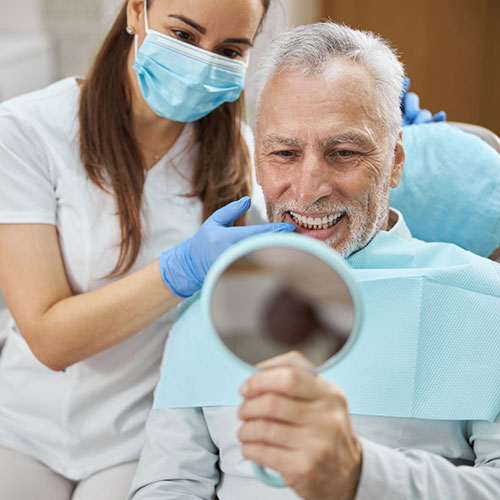
Some discomfort, swelling and bruising are normal for the first few days after implant surgery. Your surgeon may recommend over-the-counter or prescription pain relievers.
While Your Implants Heal
- Eat Soft Foods: A soft diet protects the implant sites during early healing.
- Keep Your Mouth Clean: Follow your surgeon’s instructions for gentle brushing and rinsing around the surgical areas.
- Keep Your Follow-Up Visits: We’ll check your healing and confirm the implants are ready before your denture is attached.
Caring for Your Overdenture
- Clean Daily: Take your overdenture out each day to clean it, and gently brush around the implant attachments.
- Keep Regular Checkups: Routine dental visits let your dentist check the implants, your gums and the fit of your denture.
- Expect Routine Maintenance: The small retention inserts inside your denture wear over time and are replaced periodically to keep a snug fit.
For detailed instructions, see our after care instructions.
How is an overdenture different from All-on-4?
Both options use dental implants to replace a full arch of teeth. The main difference is whether you can take your teeth out.
- Implant-Retained Overdenture: Removable. You snap it on and off yourself, and it’s usually anchored by fewer implants.
- Fixed Full-Arch Teeth (such as All-on-4): Non-removable. The teeth are secured to the implants with small screws and can only be removed by your dentist.
Each option has its own advantages, and the right choice depends on your jawbone, your budget and how you want your new teeth to feel. Explore all of your options on our dental implants page, or schedule a consultation to talk it through with our surgeons.

Take the first step towards a healthy smile
Ready to make the first step?
Call our office to schedule a consultation with Dr. McDonough or Dr. Phillips